
Steal Animal: Egg Escape
T.Game StudioAdventure
4.09.00 Reviews
- Version
- 1.1.0
- Installs
- 1.00M
- Age Rating
- Everyone
Screenshots




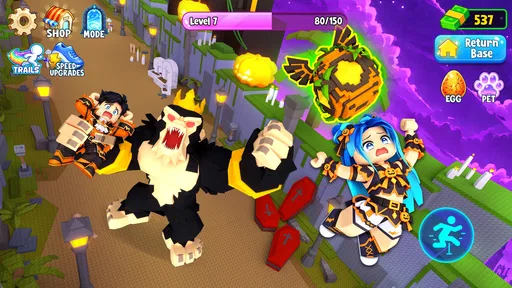
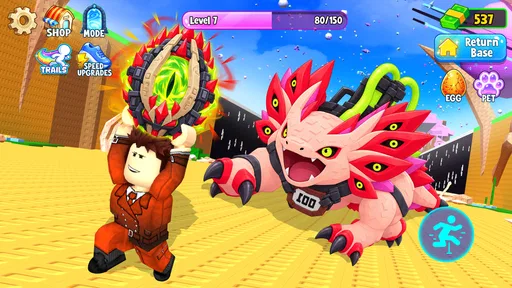
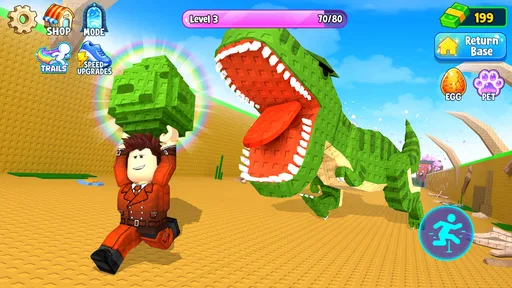
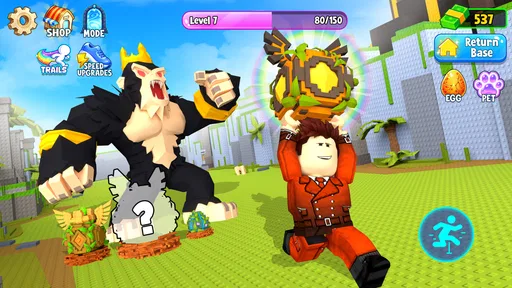
Our Review of Steal Animal: Egg Escape
 Analysis by Appyee
I spent time with Brainrot Jump: Infinite Speed as a quick, reflex-focused adventure game, and my first impression was clear: it is built around movement, timing, and the satisfaction of escaping a difficult parkour route. The premise is easy to understand. You run, jump, build speed, and try to keep the sequence alive while the course tests your reactions. That simplicity is its biggest strength, but it also means the game will appeal most to people who enjoy repeating short challenges rather than looking for a large story or a deep role-playing system.
The game comes from T.Game Studio and is available free of charge for everyone. It has reached over a million installs and holds a 4.0 average from around 1.2 thousand ratings, which suggests that the basic idea has found a sizeable audience without making it universally loved. I can understand that balance. The movement is immediately approachable, yet the experience depends heavily on whether you personally enjoy retrying a route after a small mistake.
How the fast parkour idea works in practice
Brainrot Jump: Infinite Speed does not need a long tutorial to explain itself. The central loop is familiar: move forward, jump over hazards or gaps, preserve momentum, and learn from failed attempts. That makes it suitable for a short session when I have only a few minutes, but it also gives the game a very particular rhythm. I am not opening it for a complex narrative or a large collection of systems. I am opening it because I want an immediate test of timing.
The “speed” focus changes how I approach each run. In a slower platform game, I might examine every ledge before committing to a jump. Here, hesitation can be just as damaging as a mistimed input because the whole appeal comes from maintaining flow. The most useful mindset is to treat each attempt as practice rather than as a single make-or-break performance. I watch where the previous run ended, adjust one decision, and try again.
That creates a small but meaningful distinction between random failure and useful failure. If I simply rush without noticing the reason for a mistake, repeated attempts become frustrating. If I identify whether I jumped too early, reacted too late, or lost control of the route, the next run feels purposeful. This is one of the game’s less obvious strengths: its simple controls can still encourage careful observation.
A good fit for short, focused sessions
I found the format most convincing when used in brief bursts. A commute, a waiting room, or a short break is a natural setting for this kind of game because I can start playing immediately and stop without needing to remember a complicated story. The quick-reaction design also works well when I want something more active than a passive scrolling session.
There is a catch, though. Fast games can be more tiring than they look. After several failed attempts, I notice that my attention becomes less precise, and continuing out of stubbornness does not necessarily improve my performance. My practical advice is to play in small blocks and stop after a few unfocused runs. Returning later often feels better than forcing progress while distracted.
The store summary emphasizes running, jumping, speed, and a typing-inspired asmr feeling. In practical terms, I would not treat that wording as a promise of a full typing game. The important part of the experience is the sensation of rapid movement and repeated input. Anyone expecting a dedicated typing trainer, a conventional endless runner, or a story-heavy adventure should adjust those expectations before installing it.
What progress feels like
The main sense of progress comes from improving my own execution. I learn the rhythm of a section, become less hesitant, and eventually pass a point that previously stopped me. That kind of progress can be satisfying because it is personal and immediately visible in play, even without relying on a large inventory or a complicated character-building system.
At the same time, this structure can create pressure. If a run ends because of one small error, the temptation is to restart instantly and chase a better attempt. That loop is enjoyable for players who like precision, but it is less welcoming for anyone who prefers steady advancement after every session. The game’s free entry removes the financial barrier, but it does not remove the time and attention required to improve.
I also think the title’s speed theme makes patience more important than raw aggression. Pressing inputs faster is not automatically better. A controlled sequence, with attention to the next landing rather than the current jump, is usually a more sensible approach. When I concentrate only on going faster, I make careless decisions. When I focus on reading the route and then committing, the same challenge becomes more manageable.
Spending, fairness, and the decision to keep playing
Brainrot Jump is free to download, so it is easy to try without making a purchase decision first. That is useful for a game based on quick personal preference: within a short session, I can tell whether the movement feels satisfying or whether the retry cycle is not for me. The confirmed information identifies the game as free, but it does not establish a purchase system, paid boosts, subscriptions, or other spending mechanics. I therefore would not assume that spending is required, optional, or absent beyond the free starting point.
That distinction matters when judging fairness. I can evaluate the fairness of the core challenge through play, but I cannot responsibly claim that every player has identical access to every possible progression element without clear details about purchases or monetization. My practical recommendation is simple: try the free experience first, decide whether the movement itself is enjoyable, and avoid treating any unverified spending option as part of the game’s identity.
For me, a fair parkour game should make improvement depend mainly on timing, attention, and learning the route. Brainrot Jump is strongest when I judge it on that basis. I would be cautious about comparing players by assumed access to extras, because the available product information does not establish how such extras work. That is not a reason to reject the game; it is a reason to keep the verdict focused on the part I can actually assess: the running and jumping loop.
How it compares with other adventure choices
Compared with a story-driven adventure game, this is much more immediate and much less narrative. There is no need to settle into dialogue, explore a large map, or manage a long quest chain before the action begins. That makes it a better choice when I want instant movement, but a weaker choice when I want characters, world-building, or a sense of discovery beyond the route in front of me.
Compared with a traditional endless runner, the parkour emphasis gives the experience a more deliberate feeling. The goal is not simply to watch the road pass by and react to obvious obstacles. I need to think about jumps, momentum, and the consequences of a rushed decision. Players who enjoy learning a sequence may prefer this style, while players who want a relaxed, almost automatic runner may find the repeated precision demanding.
It also differs from a conventional platformer with extensive level design and collectible systems. The attraction here is the pressure of movement itself. That focus keeps the game easy to understand, but it can make the experience feel narrow if I am looking for variety in abilities, exploration, or long-term customization. I would choose Brainrot Jump for quick reflex practice, not as my only adventure game.
Who should try it and who should skip it
I would recommend it to players who like short action games, rapid retries, and the feeling of finally clearing a section through better timing. It is especially suitable for someone who enjoys watching their own reactions improve rather than needing a detailed reward structure. The age rating of Everyone also makes the presentation broadly accessible, although individual tolerance for fast, repetitive challenge will still vary.
I would skip it if I want a substantial campaign, a calm exploration experience, or a game that steadily rewards me after every attempt. I would also look elsewhere if my main interest is typing practice, because the available description points toward a speed-themed sensation rather than positioning the title as a dedicated educational tool. Likewise, players who dislike restarting after mistakes may find the central loop more irritating than motivating.
A realistic example is a player using it during a ten-minute break. The first attempt establishes the controls, the next few reveal where timing goes wrong, and a later run may finally pass the troublesome sequence. That is a satisfying use case if the player enjoys concentrated repetition. It is a poor fit for someone who wants to relax without concentrating, because the same short session can become a string of failures when attention is low.
Version, access, and practical expectations
The current version is 1.0.7, and the game requires Android 7.1 or later. That makes checking the operating system worthwhile before trying to install it, particularly on an older device. I would also keep expectations realistic around performance: a fast movement game benefits from responsive controls, so any device that struggles with general touch response may make precise jumps feel harder than they should.
The release date is March 17, 2026, which places the game in a relatively early stage of its public life. I would approach it as a focused title that may still be developing rather than as a mature adventure platform with years of accumulated content. That does not reduce the value of the current version, but it does affect how I judge its scope. I care more about whether the central run feels good now than whether it already offers the breadth of a long-established franchise.
The audience numbers show that the game is not an obscure experiment: it has passed a million installs and attracted a visible amount of player feedback. Still, popularity should not be confused with personal compatibility. A fast parkour game can be widely downloaded and remain unsuitable for someone who prefers slower, more forgiving play. I use those figures as a sign that the concept is worth trying, not as proof that every player will enjoy it.
The details I would watch before committing
One important unknown for me is how much variety sits behind the main movement loop. The basic concept is clear, but a long-term player will naturally want to know how routes, challenges, and progression stay fresh. Since I cannot treat unconfirmed systems as facts, I would make that decision after playing the current version rather than assuming that the large install count guarantees extensive content.
I would also pay attention to how the game handles mistakes. A restart that happens quickly can support experimentation, while a slow reset can turn the same challenge into unnecessary friction. This is a useful practical test during the first session: after a failed jump, notice whether you feel invited to try a different approach or merely pushed into repeating the same movement. That reaction tells you more about personal fit than the title alone.
Another point is the meaning of “infinite speed” in everyday play. I read it as an emphasis on escalating momentum and fast parkour energy, not as a guarantee that every run will feel endlessly varied. That interpretation prevents disappointment. The game’s strongest promise is an immediate action loop; its weaker area, from a buyer’s perspective, is the lack of established detail about how far that loop expands.
For players concerned about spending, I would keep the same careful approach. The game is free, but the available facts do not define any additional purchase structure. I would not invent a claim that it is completely free of monetization, nor would I warn that it is pay-to-win without evidence. Instead, I would judge the first session on its own and make any later spending decision only after seeing an actual purchase screen and understanding what it changes.
My verdict after weighing the trade-offs
My overall view is positive but specific. Brainrot Jump: Infinite Speed succeeds as a compact adventure game built around fast parkour, repeated attempts, and personal improvement. I like that the idea is immediately readable and that a short session can still produce a clear goal: reach the next point by making cleaner decisions. The free entry and Everyone rating make it easy for a broad audience to test.
Its limitations are equally clear. The experience is focused rather than expansive, and the pressure of rapid movement will not suit players seeking relaxation or a rich story. Progress depends on persistence and attention, so someone who needs frequent rewards or dislikes repetition may lose interest quickly. The unanswered questions around broader progression and spending also mean I would avoid making promises beyond the core run-and-jump experience.
T.Game Studio has made a game that is easiest to recommend in the right situation: when you want a quick reflex challenge and enjoy turning failure into a better attempt. I would install it for short bursts, test the controls on my own device, and decide within the first session whether the speed feels exciting or exhausting. The fairest way to judge Brainrot Jump is to focus on skill, responsiveness, and replay value rather than assuming anything about unconfirmed purchases or extras.
If that sounds like your kind of play, the game is worth trying. If your ideal adventure involves exploration, story, or relaxed progress, a more traditional platform adventure will probably serve you better. For me, this is a focused, accessible speed-running experiment with a clear appeal, provided I approach it as a precision challenge instead of expecting a complete adventure world.
Verdict
Strengths of Steal Animal: Egg Escape
- Simple one-touch controls are easy to learn quickly.
- Fast-paced runs keep short play sessions engaging.
- Bright, quirky visuals give the game a distinctive style.
- Quick restarts make failed attempts feel less frustrating.
- Progression encourages players to improve their best score.
Limitations of Steal Animal: Egg Escape
- Gameplay can become repetitive after extended sessions.
- Difficulty may increase sharply without much warning.
- Frequent obstacles can make mistakes feel unavoidable.
- Limited variety may reduce long-term replay value.
- Ads or in-app purchases may interrupt the playing experience.
Other Releases by T.Game Studio
View All
Night Survive in Haunt Forest
Adventure3.4
Similar Picks in This Category
View All
Roblox
Roblox Corporation4.2

Pokémon GO
Niantic, Inc.3.5

Ninja warrior: legend of adven
TOH Games4.6

Ninja Arashi
Black Panther4.6

Eyes - The Horror Game
Fearless Games sp. j.4.5

Critical Action:Gun Strike Ops
FPS Shooter & Action Game4.3
Frequently Asked Questions
What is Brainrot Jump: Infinite Speed?
Brainrot Jump: Infinite Speed is a fast-paced mobile game built around jumping, reflexes, and continuous forward movement. Players guide a character through challenging stages while avoiding obstacles, collecting useful items, and trying to achieve the highest possible score. Its simple controls make it easy to start, while increasing speed and more demanding level layouts provide a greater challenge over time.
How do you play Brainrot Jump: Infinite Speed?
The gameplay is designed to be straightforward for mobile users. You generally tap or use on-screen controls to make the character jump, avoid hazards, and move through each section safely. Timing is especially important because the action becomes faster and obstacles can appear with less reaction time. Practicing short sessions helps you learn patterns, improve coordination, and reach farther distances.
Is Brainrot Jump: Infinite Speed suitable for children?
The game is generally suitable for players who enjoy colorful, quick-reaction arcade experiences, including many younger users. However, parents should review the game’s age rating, advertisements, in-app purchase settings, and privacy information before allowing children to play. Because the speed can increase and repeated attempts may encourage extended play, it is also sensible to set reasonable screen-time limits.
Does Brainrot Jump: Infinite Speed require an internet connection?
The basic jumping gameplay may work without a constant internet connection, depending on the version installed and the device being used. Some features, such as advertisements, rankings, cloud-related services, updates, or promotional content, may require access to the internet. If you plan to play offline, download the game first and test its main modes after temporarily disabling your connection.
Is Brainrot Jump: Infinite Speed free to download and play?
Brainrot Jump: Infinite Speed may be available as a free download, but the exact monetization model can vary between Android and iOS versions. Free games commonly include advertisements, optional purchases, or both. Before installing, check the official store listing for current pricing, permissions, subscription details, and purchase information, and use device-level purchase restrictions if children will be playing.
Play our best games!


